
Let the Journey Begin: how our work with the BBC started in Myanmar
Image Diplomacy became an official representative for BBC News through a single campaign. In 2013 we created Myanmar's first ever nation-branding campaign, "Let the Journey Begin," for the country's Ministry of Hotels and Tourism, and we brought it to the BBC to launch on a global stage. That one campaign opened a relationship that now runs across BBC News mandates in several markets. This is how it actually happened, including the part we do not usually talk about.
We did not win the BBC in a pitch
We arrived with something worth airing.
In 2012 we came to Myanmar for a feature for The Daily Telegraph and ended up staying for the best part of a decade. The country was opening to the world for the first time in a generation, and the Ministry of Hotels and Tourism wanted that world to see it clearly rather than through old assumptions. In a meeting with the Ministry we put forward an idea that became something the country had never had before: a nation-branding campaign. We called it "Let the Journey Begin."
An idea like that needs a stage worthy of it. A government film that plays to no one changes nothing. So we went to the BBC, campaign in hand, because we wanted the audience that decision-makers actually watch. That was the first conversation, and it is the real origin of everything that followed. We did not start with a media contract and look for something to fill it. We started with a country's story and found the platform that deserved it.
The launch: a coup at the World Economic Forum
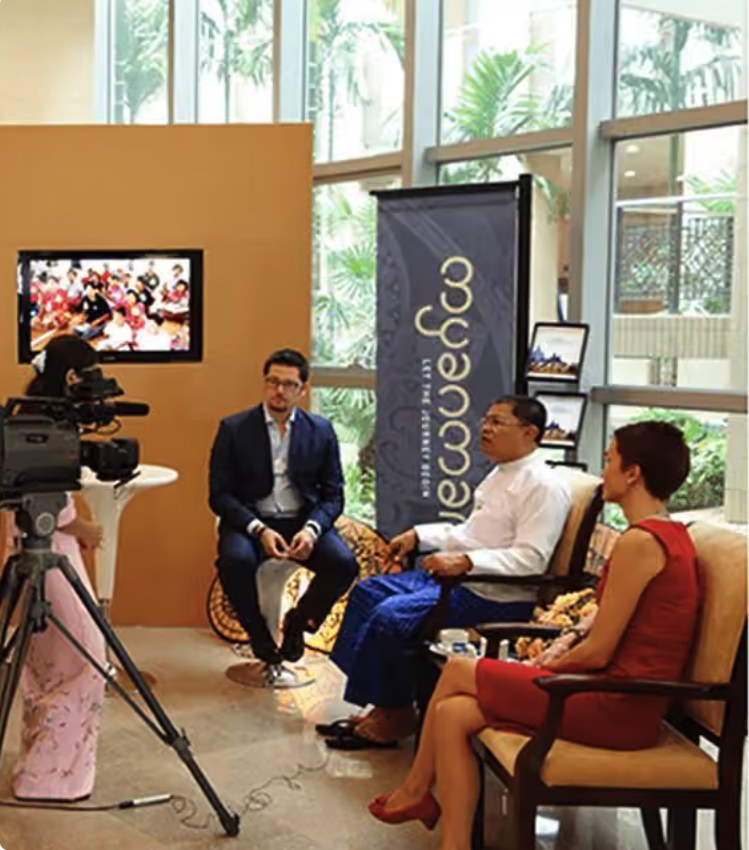
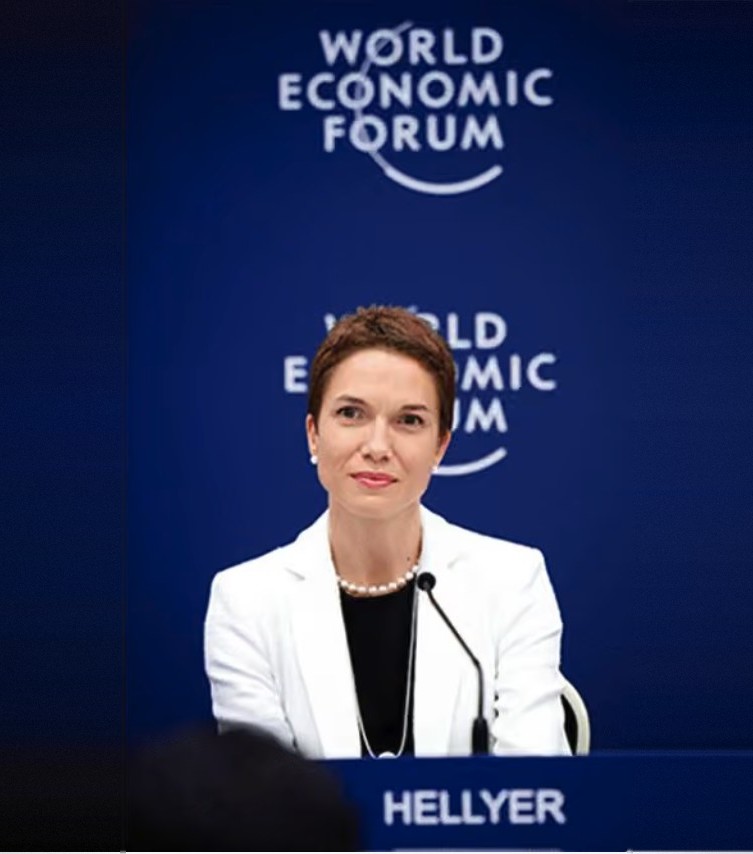
We launched "Let the Journey Begin" at the World Economic Forum on East Asia, held in Nay Pyi Taw in June 2013. It was the first time Myanmar had hosted the Forum, and it drew heads of state, investors and global media into a country most of them had never set foot in.
For a young agency it was a coup. We had the chance to introduce a nation in front of one of the most powerful audiences in the world, and then to carry it onto BBC World News. The campaign was very well received. The Myanmar mandate with the BBC began at that moment. Not after years of lobbying, but on the strength of work that earned its place on the screen.
The part nobody sees: fifteen days, one festival and a monsoon
Here is the bit that still makes us smile.
We had to film an entire country, and we had almost no time to do it. The only window available ran straight into Thingyan, Myanmar's New Year water festival. Thingyan runs from 13 to 16 April and it is the biggest holiday in the country. For days the nation stops, people pour into the streets and douse each other with water to wash away the old year. Nothing moves. Crews, officials, drivers, everyone is rightly with their families.
On the other side of that holiday the monsoon closes in by late May, and once the rains arrive the light and the logistics turn against you. So our real filming window was the narrow gap between a national shutdown and the weather, and we had roughly fifteen days to use it.
Then there is the country itself. Myanmar is roughly the size of France and the United Kingdom combined. We were moving people and equipment across that distance, against the calendar and the clouds, to capture a place worth believing in. It was the hardest part of the whole campaign, and it is the reason the result felt earned. Anyone can promise a beautiful film. Delivering one in that window is a different thing.
How trust was built: from one market to many
We were largely based in Myanmar from 2012 to 2020. For most of that time the BBC relationship was Myanmar, and we kept proving it campaign by campaign.
The clearest sign that the trust had changed came in April 2020. As the pandemic took hold we relocated back to Malta, and rather than the relationship narrowing, it widened. We were given further territories to represent for BBC News. That is the moment we stopped being the agency that had launched one country and became a standing representative across a portfolio of markets. Trust in this business is not announced. It is handed to you in the form of more responsibility.
What the work proves: Morocco
A relationship is only as good as what it delivers for clients, so here is the evidence.
For the Moroccan Agency for Investment and Export Development, AMDIE, we ran the "Morocco Now" campaign on BBC World News and BBC.com. The BBC measures campaign effectiveness through AdScore, a controlled brand study that compares people who saw the campaign against a matched group who did not, so the difference can be attributed to the work rather than to chance.
The results from the study were strong. Among audiences exposed to the campaign, familiarity with Morocco rose by 51 percent, positive opinion of the country by 96 percent, and likelihood to recommend it by 87 percent. Seventy-seven percent of those audiences agreed that the BBC was the right place for Morocco to advertise. We have delivered alongside this in Malta as well, and we are in close contact with clients in our other markets, with new campaigns starting soon.
Numbers like these are why the relationship that began with one Myanmar film now stands across several countries.
Where the relationship is today
Day one was two people reaching out to the BBC with a campaign for a country few had visited and asking for a place on the screen. Today Image Diplomacy holds standing BBC News mandates across several markets, with delivered campaigns and measured results behind us and more in motion.
What has not changed is the approach. We still start with a story worth telling and a client worth backing, and we still believe the right platform makes the difference between a message and an audience. The BBC was the right platform in Nay Pyi Taw in 2013, and it is the right platform now.
If you represent a government, a tourism board, an investment agency or a brand that needs to be seen by the people who shape decisions, that is exactly the work we do. Let the journey begin.
The campaign films
Gabriele Villa & Sorcha Hellyer